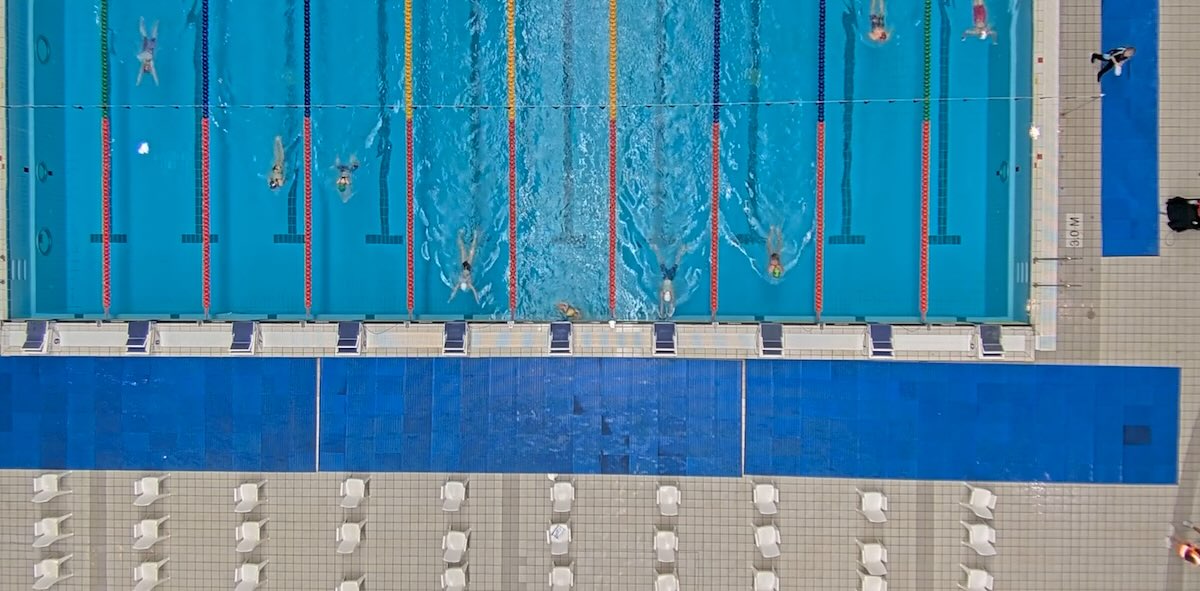

For the first time, World Aquatics has formally recognised video timing as the typical backup system for touchpads in swimming competition. The change appears in Section 15.16 of the World Aquatics Competition Regulations dated 18 February 2026 — and it has significant implications for how meets are run at every level of the sport.
The previous standard — touchpads backed up by manually operated buttons — is now categorised separately as Semi-Automatic Officiating Equipment. Automatic Officiating Equipment, the highest defined category, is now formally described as touchpads typically with video as the backup timing system.
What has changed
Section 15.16 of the 2026 regulations defines the two categories of officiating equipment for the first time with meaningful distinction:
Automatic Officiating Equipment is defined as a system where the athlete touching the touch panel stops their timer, and — in the regulation’s own words — “typically, the video recording calibrated to 1/100 of a second comprises the back-up timing system.”
Semi-Automatic Officiating Equipment covers systems where either the touch panel is backed up by timekeepers manually pressing a button, or — where no working touch panels are available — button timekeepers alone determine the result.
This distinction matters. For the first time, the regulations draw a formal line between touchpad systems that use video as their backup and those that use human button operators. Video timing now sits within the sport’s highest defined equipment category. Button-backed systems sit in the category below.
Why this has happened
This is not a sudden policy shift. It is a formal acknowledgment of what elite competition has quietly known for years.
At the Olympic Games, World Aquatics Championships, and major national competitions around the world, high-speed video timing has operated alongside touchpads as a matter of course. What the 2026 regulations have done is make that practice explicit. The sport’s governing body has looked at how elite timing actually works and written it into the rulebook.
The addition of a mandatory Video Review Supervisor and Video Review Judges to the required officiating structure at the Olympic Games and World Aquatics Championships — codified in previous regulations — reinforces the same direction of travel. Video is no longer supplementary. It is structural.
Why it matters for Athletes and Coaches
Incorrect results have real consequences. They affect selection outcomes, qualifying times, and an athlete’s official competitive record. For developing swimmers competing for representative selection, a wrongly recorded result is not a minor administrative inconvenience — it can alter the trajectory of a season or a career.
The formal recognition of video timing as the backup to touchpads gives Officials a stronger foundation for verifying results. The regulations already require that every Automatic Officiating Equipment installation include a “facility to correct results based on an erroneous touch” (Article 15.16.6.7). The existence of a video backup system is the most direct and reliable means of identifying whether an erroneous touch has occurred.
Greater results integrity is a straightforward win for athletes and coaches at every level of the sport.
What this means for Venues
Venues operating touchpad systems with button backups will note that their configuration now sits within the Semi-Automatic category rather than the top-tier Automatic definition. This is worth understanding clearly: it does not mean existing touchpad installations are no longer valid or compliant for competition. It means the regulations now formally distinguish between those systems and touchpad systems with video backup.
For venues considering their timing infrastructure, the path forward is clearer than it might initially appear. High-speed video timing has become significantly more accessible in recent years — both in cost and in operational simplicity. The addition of a video backup system to an existing touchpad installation does not require replacing what is already in place. It completes the system that World Aquatics has now formally described.
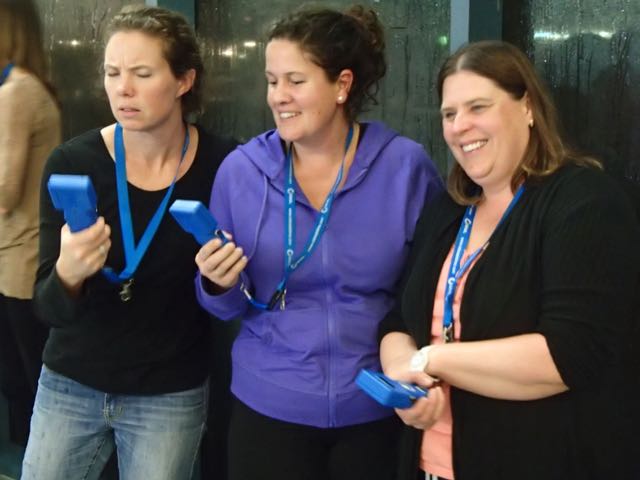
The operational benefits compound quickly. A video backup system eliminates the need for deck timekeepers — typically three per lane at a fully staffed competition. Across an eight-lane pool, that is up to twenty-four timekeeper positions removed from the operational overhead of running a meet, representing a reduction of around 75% in the officiating workforce typically required for manual timing backup. Officials can review and adjudicate with greater confidence. The meet runs with fewer moving parts.
Olly Timing’s position
Olly Timing has operated at the intersection of video timing and touchpad systems since our founding. We have recorded over 200,000 swim times and removed more than eight person-years of timekeeper effort from Australian competitions. Our top-tier systems operate to 1/100 of a second and align directly with the Automatic Officiating Equipment definition in the 2026 World Aquatics Competition Regulations.
We operate in two configurations: as a standalone primary timing system at venues without touchpads, and alongside existing touchpad infrastructure as the video backup system that Section 15.16.1.2 now formally describes.
Olly Timing Founder Ben Ramsden said: “World Aquatics has made something explicit that elite competition has known informally for years — video timing belongs at the finish line. The rules have caught up with the practice. Formal recognition creates a clear win for everyone. Athletes and coaches gain greater results integrity. Officials can review and adjudicate with more authority. Venues can de-risk their existing timing infrastructure. And meet organisers can run events with significantly fewer people on deck.”
About Olly Timing
Olly Timing is a swimming competition video timing company based in Sydney, Australia. Our technology has successfully recorded over 200,000 swim times and removed more than eight person-years of timekeeper effort from competition operations. OllyGo is our mobile system for competition use; OllyVenue is our permanent installation solution. Our top-tier systems are calibrated to 1/100 of a second in alignment with the World Aquatics Competition Regulations.